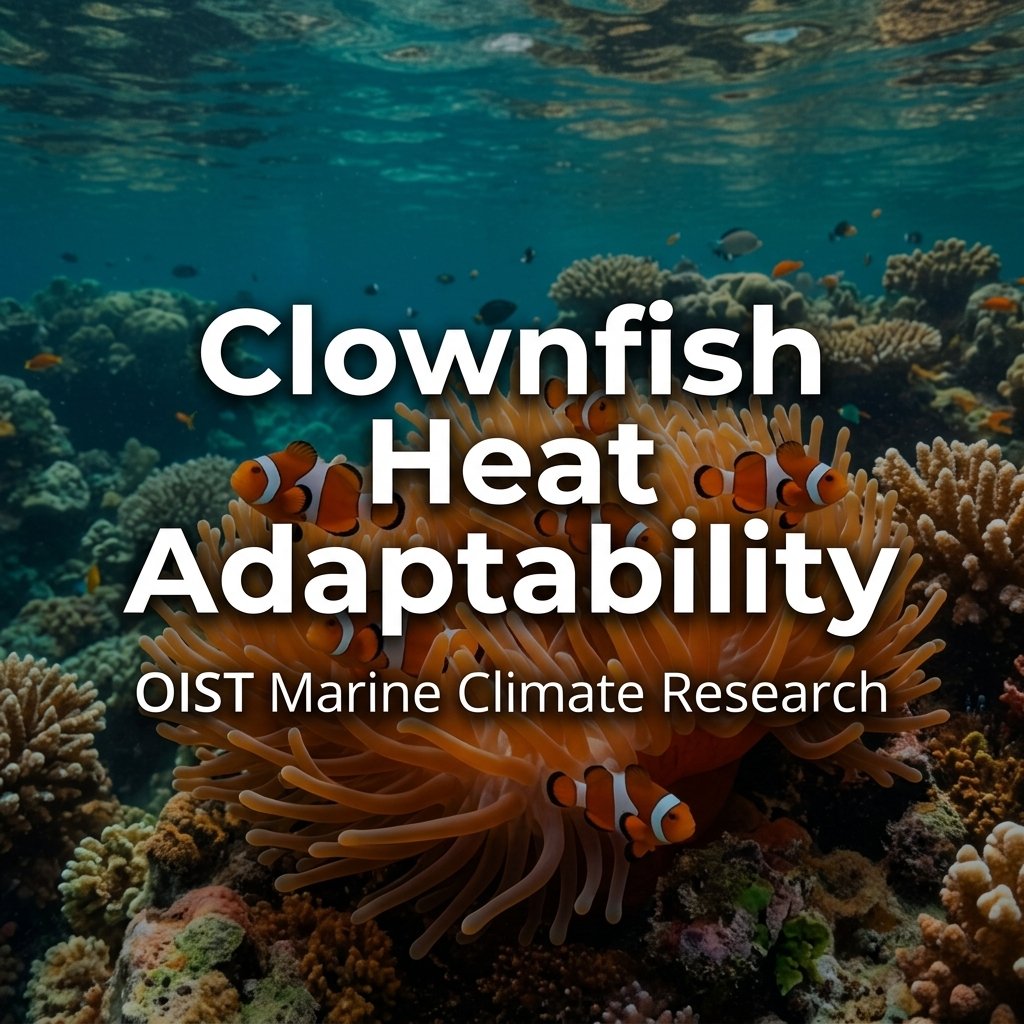
A new scientific study has offered a ray of hope for tropical reef fish facing climate change. Researchers at the Okinawa Institute of Science and Technology (OIST) have identified the metabolic and molecular changes that allow juvenile clownfish to adapt and acclimate to rising ocean temperatures.
Genomic Insights into Heat Acclimation
With ocean surface temperatures projected to rise by up to 4°C over the next 75 years, marine ecosystems are under severe threat. While coral bleaching is a widely recognized consequence of global warming, less has been known about how fish species will adapt. In a study published in the journal iScience, scientists from OIST’s Marine Climate Change Unit explored how young common clownfish (Amphiprion ocellaris) respond to elevated water temperatures at a genomic level.
The research team, led by first author Billy Moore and Professor Timothy Ravasi, exposed newly hatched clownfish to a water temperature of 31°C for two months (compared to the normal summer temperature of 28°C) and monitored their gene expression and physiological changes.
Metabolic Reprogramming in Liver and Pancreas
The study revealed significant tissue-wide metabolic shifts, particularly in the liver and pancreas:
- Reduced Insulin Secretion: Lower insulin activity was observed, helping the fish manage energetic resources under thermal stress.
- Increased Oxidative Phosphorylation: Cellular respiration in these key metabolic organs increased, allowing the fish to maintain energy levels despite the heat.
Crucially, the researchers noted that while acute heat exposure (a brief shift to 31°C) caused metabolic spikes, clownfish exposed to chronic, long-term warming adapted successfully, returning to stable metabolic rates. Furthermore, the study demonstrated that the earlier in their life cycle the fish were exposed to warmer water, the more effectively they could acclimatize.
Balancing Hope and Future Concerns
“While we’ve found mechanisms for heat acclimation, these biological changes may have other long-term negative impacts on fish health,” notes Professor Timothy Ravasi. Acclimatizing to higher temperatures requires trade-offs in energy that could affect growth, reproduction, or immune responses over a fish’s lifespan. Nonetheless, the findings confirm that tropical fish possess developmental plasticity, offering a path for adaptation in warming oceans.
For more detailed scientific data, read the full research paper: Ocean warming drives tissue-wide metabolic reprogramming in a fish. To learn more about the institute, visit the Okinawa Institute of Science and Technology (OIST).
Frequently Asked Questions
How high were the temperatures used in this study?
Newly hatched clownfish were exposed to 31°C water, which is 3°C above the typical ambient summer water temperature of 28°C in their habitat.
Does early-life exposure improve heat tolerance?
Yes. The study showed that clownfish exposed to higher temperatures immediately after hatching acclimated much better than those exposed later in development.
Are there negative side-effects to this adaptation?
While the fish survived and acclimated, the energetic cost of thermal reprogramming could potentially impact their long-term growth, reproductive success, or immune systems, which requires further study.