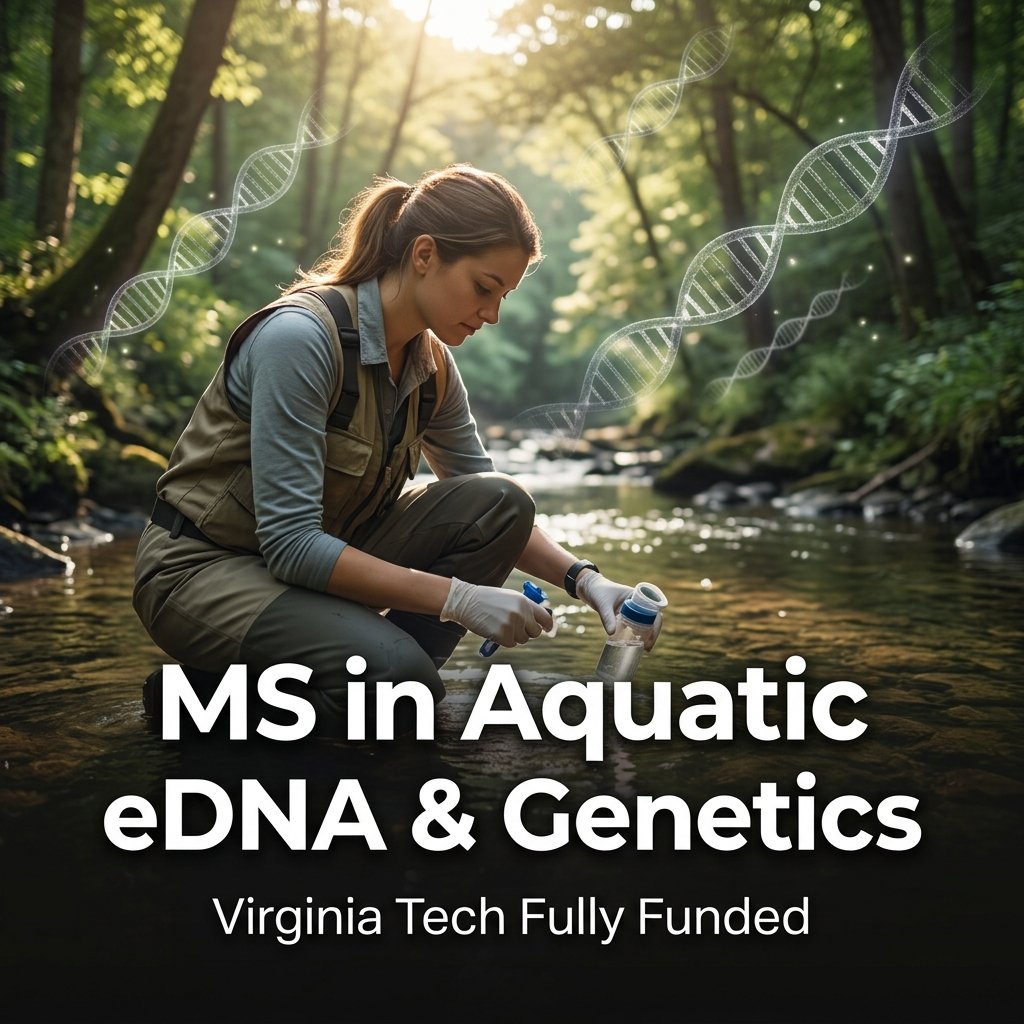
Virginia Tech’s Department of Fish and Wildlife Conservation is recruiting applicants for a fully funded Master of Science (M.S.) position in Aquatic eDNA and Conservation Genetics. This graduate research assistantship, beginning in Fall 2026, offers an exceptional opportunity for students interested in environmental DNA technologies, conservation science, and applied wildlife management.
Research Scope and Program Focus
The successful candidate will join the Cooper Lab at Virginia Tech. The research focuses on environmental DNA (eDNA) surveys targeting both threatened and invasive aquatic species in Virginia. The project aims to develop, test, and refine novel eDNA methodologies to enhance the accuracy and efficiency of traditional aquatic biodiversity monitoring. While the lab has a strong foundation in amphibian systems, students will have the flexibility to explore other aquatic taxonomic groups, customizing the project to their research interests.
Why Aquatic eDNA Matters in Conservation
Environmental DNA (eDNA) is a revolutionary molecular tool in ecology. By analyzing genetic material shed by organisms in water, researchers can monitor biodiversity without the need for physical capture. This non-invasive method is critical for tracking rare, elusive, or endangered species. Students in this program will work on:
- Improving survey methodologies for endangered aquatic species
- Enhancing early detection of invasive aquatic organisms
- Evaluating metabarcoding and metagenomic approaches
- Translating genomics data into actionable conservation and policy decisions
Research Responsibilities and Training
This assistantship provides hands-on training across field ecology, molecular biology, and bioinformatic analysis. Key responsibilities include:
- Conducting aquatic field sampling for eDNA across diverse habitats
- Performing traditional field surveys for target taxa (amphibians, macroinvertebrates, etc.)
- Conducting lab work (DNA extraction, PCR, qPCR, and sequencing library preparation)
- Managing and analyzing genomic datasets using statistical and bioinformatic tools
- Collaborating with state wildlife agencies and faculty researchers
- Writing scientific manuscripts, reports, and presenting at conferences
Funding, Salary, and Financial Support
This position is fully funded for two years (contingent on academic progress), offering:
- An annual salary of $33,600 (approx. $2,800 monthly stipend) via GRA and GTA appointments
- Full tuition waiver
- Comprehensive health insurance through Virginia Tech
Required and Preferred Qualifications
Required Qualifications:
- B.S. in biology, ecology, wildlife science, marine science, or a related discipline.
- Strong interest in molecular conservation research.
- Ability to work independently and collaboratively.
- Excellent communication and organizational skills.
Preferred Qualifications:
- Prior experience with aquatic or wildlife field sampling.
- Laboratory experience in molecular biology (PCR, DNA extraction, sequencing).
- Familiarity with R, Python, GIS, Linux/Bash, or bioinformatic workflows.
Application Guidelines
Interested applicants should submit their application materials as a single PDF containing a cover letter (outlining background and goals), CV, unofficial transcripts, and contact information for 2-3 references.
Email materials directly to Dr. Robert Cooper at robertcooper@vt.edu. Please use the subject line: MS Application – eDNA – Fall 2026 – [Your Last Name].
Application Deadline: Review begins on a rolling basis, with priority given to submissions received by January 9, 2026. For further details about the lab, visit the Cooper Lab Faculty Page.
Frequently Asked Questions
Is the program fully funded?
Yes. The position includes a competitive monthly salary, tuition remission, and health insurance for two years.
Can international students apply?
Yes. International applicants are welcome to apply as long as they meet the graduate admissions criteria of Virginia Tech.
Do I need previous bioinformatic experience?
No. Prior experience is helpful, but candidates with a strong interest and willingness to learn computational tools are encouraged to apply.