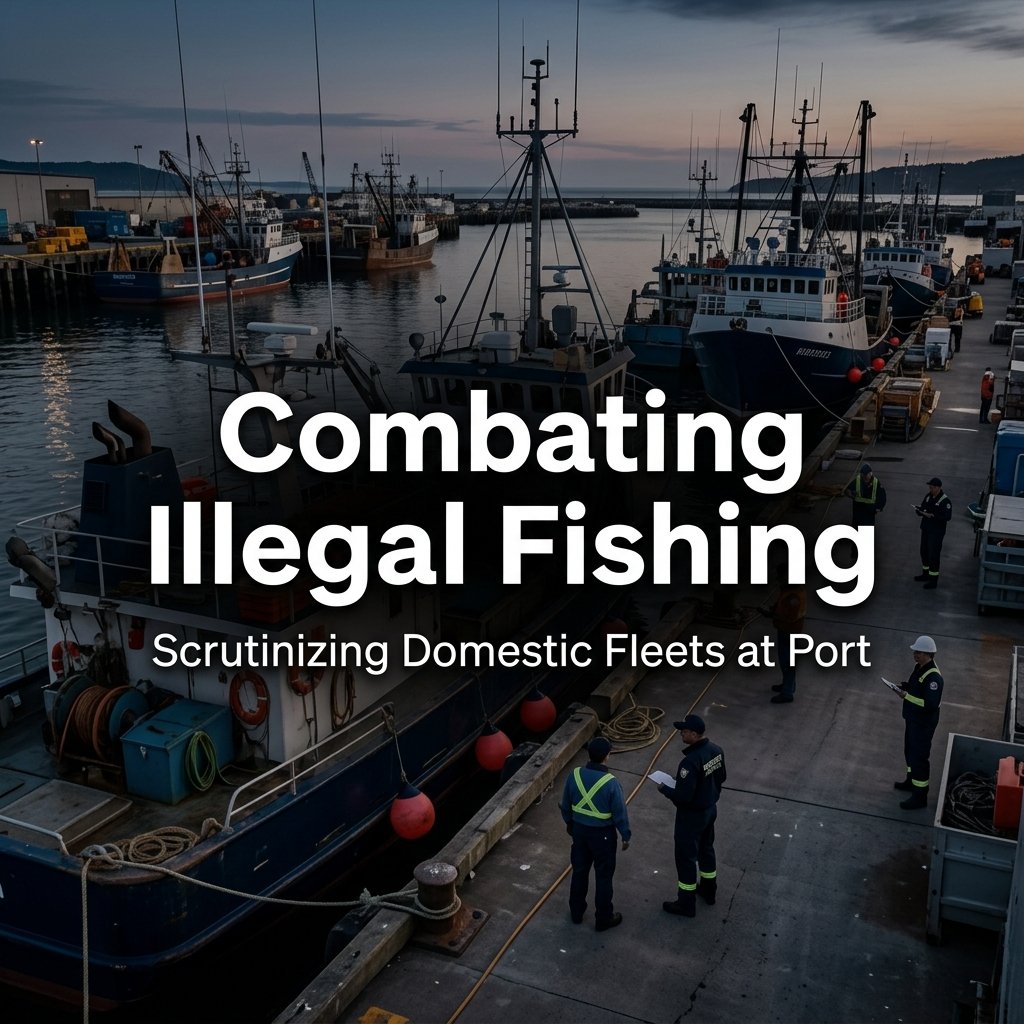
A new study published in the journal Science Advances highlights a critical gap in international fisheries management: while treaties like the Port State Measures Agreement (PSMA) have successfully targeted foreign-flagged vessels, inconsistent enforcement standards on domestic fishing fleets threaten to undermine efforts to deter illegal fishing.
The Rise of the Port State Measures Agreement
Illegal, unreported, and unregulated (IUU) fishing costs coastal states billions of dollars annually in lost revenues, threatens the livelihoods of millions, and causes severe ecological damage. To address this, the UN FAO’s Port State Measures Agreement (PSMA) entered into force in 2016. The treaty requires member states to designate specific ports for foreign fishing vessels, perform inspections, and deny entry to illegal catches.
As of late 2025, there are 84 Parties to the PSMA. A research team led by Elizabeth Selig, managing director of the Stanford Center for Ocean Solutions, explored how vessel behavior in international waters changed before and after the treaty’s implementation using Global Fishing Watch satellite tracking data.
Positive Progress in Restricting Illegal Landings
The study analyzed the movements of fishing vessels larger than 300 gross tons. The researchers discovered that the proportion of estimated high-seas catches landed in ports of PSMA member states doubled between 2016 and 2021. As more countries ratified the treaty, the distance vessels had to travel to find a non-compliant port doubled, making it significantly harder for vessels to bypass inspections.
“These results indicate it’s getting harder for fishing vessels to avoid landing in ports where countries have adopted the PSMA,” explained co-author Jim Leape, co-director of the Stanford Center for Ocean Solutions.
The Loopholes: Domestic Fleets and Flag Swapping
Despite this progress, the researchers identified major loopholes:
- Domestic Fleets Dominate: The share of high-seas catches landed in domestic ports rose from 31% in 2016 to 46% in 2021. By 2021, domestic vessels accounted for 66% of high-seas port visits globally, yet they are rarely subjected to the same inspection standards as foreign vessels.
- Opportunistic Flag Swapping: Following the PSMA’s enactment, researchers observed a 30% increase in flag-state changes among vessels. By changing their flag to a domestic state, vessels could circumvent strict international port inspections.
Strengthening Port Controls
Article 20 of the PSMA states that inspections of domestic vessels should be as effective as those for foreign vessels, but does not specify equivalent procedures. The authors argue that closing the domestic loop is vital. “The dominance of domestic vessels in port visits globally highlights an opportunity for PSMA Parties to strengthen implementation of Article 20 by extending similar port state measures to their domestic fleets,” said co-author Colette Wabnitz.
For more detailed findings, view the full paper in Science Advances: Leveraging port state measures to combat illegal, unreported and unregulated fishing. Learn more about the research initiatives at Stanford University.
Frequently Asked Questions
What is the difference between a domestic and foreign vessel?
A vessel is domestic if it unloads its catch in the country under whose flag it is registered. It is considered foreign if it offloads in a different country.
Why is port enforcement preferred over open-sea patrols?
Inspecting vessels at port is logistically simpler and far more cost-effective than deploying naval or coast guard vessels for open-ocean enforcement.
How did researchers track the vessels?
The team analyzed engine power consumption, fishing hours, and coordinates using public satellite and AIS data curated by Global Fishing Watch.