Jammu and Kashmir, particularly the Kashmir Valley, has emerged as one of India’s most promising regions for cold-water aquaculture owing to its abundant pristine water resources, congenial climatic conditions, and increasing scientific and technological interventions in the fisheries sector. The Union Territory recorded an estimated fish production of approximately 29.4 thousand metric tonnes during 2024–25, reflecting sustained sectoral growth and progressive expansion of aquaculture activities. Fish production in the region has shown a steady upward trend, increasing from nearly 25,000 metric tonnes in 2022 to around 29,000 metric tonnes in 2024–25, thereby contributing significantly to livelihood generation, nutritional security, employment creation, and diversification of the rural economy.
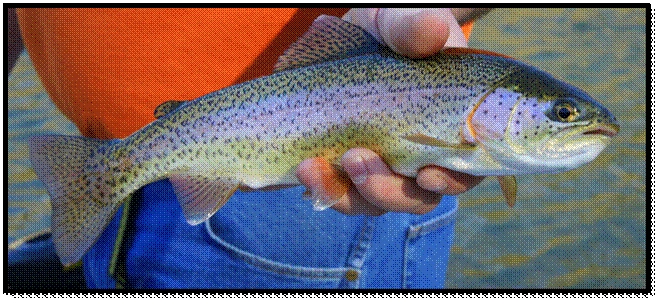
A distinctive characteristic of aquaculture development in the region is the prominence of cold-water fisheries, particularly the culture of Rainbow Trout. Rainbow trout farming has gained remarkable momentum in Jammu & Kashmir, positioning the Union Territory among the leading trout-producing regions of India. The consistent rise in trout production can be attributed to the adoption of improved aquaculture practices, scientific broodstock management, quality seed production, advanced feed utilization, and better farm management strategies. Furthermore, the increasing establishment of private trout farms, hatcheries, and raceway systems demonstrates the growing entrepreneurial interest in trout aquaculture, supported by favorable environmental conditions and strong market demand for this high-value fish species.
The advancement of scientific aquaculture practices in Kashmir has created substantial opportunities for rural entrepreneurship and economic empowerment. One notable example is the trout farming enterprise “Trout Farming – Sumlar Bandipora,” owned by Mr. Abdul Basit Khoja of Sumlar, Surrendar, Nadihal, and Dardpora villages in Bandipora, which stands as an inspiring model of successful cold-water aquaculture entrepreneurship in the region.
Top of Form
In the picturesque foothills of Sumlar in Bandipora, a remarkable example of successful aquaculture entrepreneurship has emerged through the enterprise “Trout Farming – Bandipora.” Owned and managed by Mr. Abdul Basit Khoja, the farm exemplifies how scientific intervention, technical expertise, and entrepreneurial vision can transform rural livelihoods and strengthen the cold-water aquaculture sector in Jammu and Kashmir.
Recognizing the immense potential of the region’s pristine cold-water resources, Mr. Abdul Basit Khoja ventured into the culture of Rainbow trout, a premium and high-value fish species ideally suited to the ecological conditions of Kashmir. His entrepreneurial journey gained significant momentum through continuous technical guidance, scientific consultancy, and field-level support provided by the Faculty of Fisheries, SKUAST-Kashmir.
A pivotal contribution to the success of the enterprise was made by Dr. Mohd Ashraf Rather and his scientific team, whose mentorship played a crucial role in improving broodstock management, feed utilization, water quality management, fish health monitoring, and overall farm operations. The adoption of these science-based aquaculture practices substantially enhanced farm productivity, operational efficiency, and sustainability.
During the 2024–25 production cycle, the enterprise achieved an impressive production of approximately 80 quintals of marketable trout, which were successfully supplied to premium local and regional markets. The farm generated an estimated annual turnover of nearly ₹1 crore, highlighting the strong economic viability and commercial potential of scientifically managed trout farming systems in the Kashmir Valley.
Beyond its financial achievements, the enterprise serves as an outstanding model of sustainable aquaculture development due to several noteworthy contributions, including:
- Adoption of modern, science-driven aquaculture technologies and management practices
- Generation of local employment opportunities and enhancement of rural skill development
- Functioning as a demonstration and learning unit for aspiring fish farmers, entrepreneurs, and youth interested in aquaculture ventures
The success of Trout Farming – Bandipora demonstrates the powerful synergy between progressive entrepreneurship and institutional scientific support. It reflects how dedicated farmers, when empowered through research-based technologies and professional guidance, can establish profitable and sustainable aquaculture enterprises capable of contributing significantly to rural economic development.
This inspiring success story not only strengthens the status of trout farming in Jammu & Kashmir but also establishes a benchmark for future cold-water aquaculture ventures across Himalayan and temperate ecosystems.
Infrastructure development has further accelerated the growth of aquaculture in the region. The establishment of modern hatcheries, feed mills, and advanced aquaculture systems such as Recirculating Aquaculture Systems (RAS) and biofloc technology has considerably improved production capacity, resource efficiency, and technological advancement within the sector. Institutional support from organizations such as the Faculty of Fisheries, SKUAST-Kashmir, along with flagship government initiatives including the Pradhan Mantri Matsya Sampada Yojana (PMMSY) and the Holistic Agriculture Development Programme (HADP), has facilitated technology dissemination, farmer training, capacity building, and financial assistance, thereby promoting rapid sectoral development.
Despite significant progress, the aquaculture sector in Jammu & Kashmir continues to face several challenges. Environmental concerns such as water pollution, habitat degradation, and climate change threaten the sustainability of cold-water ecosystems. In addition, issues related to disease outbreaks, limited availability of quality seed, inadequate cold-chain infrastructure, and unorganized marketing systems remain key constraints affecting sectoral expansion and profitability. Addressing these challenges through integrated scientific, infrastructural, and policy interventions is essential for ensuring long-term sustainable growth.
Looking ahead, the future prospects of aquaculture in Jammu & Kashmir remain highly promising. There is substantial potential for expanding trout farming into new geographical areas, integrating advanced technologies such as RAS, biofloc systems, and genomics-based selective breeding programmes, and diversifying culture practices to include species such as carps, mahseer, and ornamental fishes. Furthermore, value addition, branding initiatives for “Kashmir Trout,” and the development of national and international export markets can significantly enhance economic returns. With continued scientific innovation, institutional collaboration, policy support, and entrepreneurial participation, aquaculture has the potential to emerge as a major driver of sustainable economic growth, employment generation, and rural prosperity in the region.

Documented by Dr. Mohd Ashraf Rather
Assistant Professor/Scientist,
Faculty of Fisheries
SKUAST-K