
E-Content in 4 Quadrants/E-book
Fish Breeding and Hatchery Operation Course

Course Coordinator
Dr.Mohd Ashraf Rather
Division of Fish Genetics and Biotechnology, Faculty of Fisheries, Rangil- Ganderbal, SKUAST-Kashmir
Contents
Section 1: Introduction to Rainbow Trout and Raceway Culture
1.1 Introduction of Rainbow trout
1.2 Raceway Culture of Rainbow trout
Section 2: Brood Stock Management and Selection
2.1 Brood Stock Management
2.2 Selection and Identification of Brood Stock
Section 3: Breeding Techniques
3.1 Breeding of Rainbow trout
3.2 Demonstration of Stripping Methods (Wet and Dry Methods)
Section 4: Hatchery Management and Operations
4.1 Egg Handling and Incubation
4.2 Monitoring and Maintaining Optimal Conditions for Incubation
4.3 Hatchery Operations and Record Keeping
Section 1: Introduction to Rainbow Trout and Raceway Culture
1.1 Introduction of Rainbow trout
The Rainbow Trout (Oncorhynchus mykiss) is a species of salmonid native to cold-water tributaries of the Pacific Ocean in North America and Asia. It is one of the most commercially important and widely cultured coldwater fish species in the world, prized for its rapid growth, adaptability to various culture environments, and high market demand for both food and sport fishing.
Taxonomy and Morphology
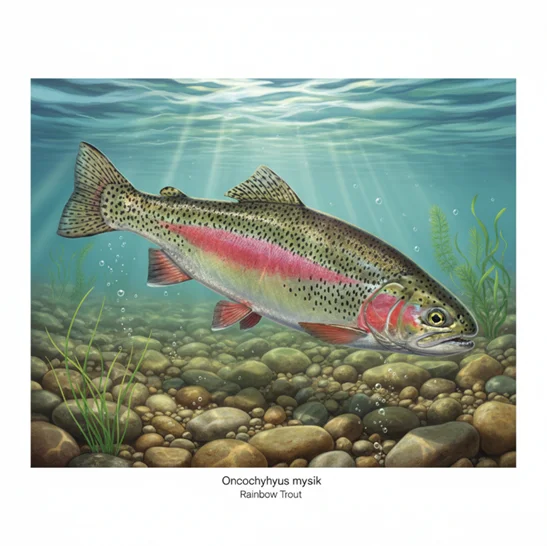
Originally named Salmo gairdneri, genetic studies in 1989 revealed its closer relation to Pacific salmon, leading to its reclassification into the genus Oncorhynchus. Adult freshwater stream trout typically weigh between 0.5 and 2.5 kg. They are distinguished by their vibrant, multi-hued coloration. The body is generally blue-green or olive green with heavy black spotting. A characteristic broad reddish-pink stripe runs along the lateral line from the gills to the tail, which is most vivid in breeding males. The anadromous (sea-run) form, known as steelhead, is more silvery and can grow much larger, reaching up to 9 kg.

Figure 1: The Rainbow Trout (Oncorhynchus mykiss), showcasing its distinctive pink lateral stripe and spotted pattern.
Life Cycle and Reproduction
The life cycle of the rainbow trout begins with eggs laid in a gravel nest, or “redd,” created by the female in a stream or river. Spawning is naturally triggered by environmental cues, primarily increasing day length (photoperiod) and water temperatures reaching 6 to 7°C (42 to 44°F), which typically occurs in late winter or spring.
1. Egg Stage: Fertilized eggs incubate in the gravel for 4 to 10 weeks, depending on water temperature. During this time, they are vulnerable to sediment, low oxygen, and predation.
2. Alevin (Sac Fry) Stage: Upon hatching, the young fish, called alevins, remain in the gravel. They are attached to a yolk sac, which provides their nutrition for the first 2-3 weeks.
3. Fry Stage: Once the yolk sac is absorbed, the fry emerge from the gravel and begin to actively search for food, such as zooplankton and small insects.
4. Parr/Juvenile Stage: As they grow, they develop vertical bars on their sides known as “parr marks” for camouflage. They remain in this stage for one to three years.
5. Adult Stage: Upon reaching maturity, they are ready to spawn. While some populations remain in freshwater for their entire lives, others (steelhead) migrate to the ocean to feed and grow before returning to freshwater to reproduce.
Ecological and Economic Significance
Rainbow trout have been introduced to every continent except Antarctica for recreational fishing and aquaculture. Their adaptability has allowed them to establish wild, self-sustaining populations in many regions. However, this has also led to them being listed as one of the world’s top 100 invasive species, as they can out-compete, prey on, or hybridize with native fish species.
In aquaculture, rainbow trout are highly valued. They are relatively easy to spawn under artificial conditions, grow quickly, and are tolerant of handling and a range of environments. This makes them an ideal candidate for intensive farming systems, such as raceways, which contribute significantly to global seafood production and provide economic opportunities in rural and mountainous regions.
1.2 Raceway Culture of Rainbow trout
Raceway culture is a highly intensive, flow-through aquaculture system commonly used for the commercial production of salmonids, particularly rainbow trout. This system relies on a constant flow of high-quality water to maintain a healthy environment for fish stocked at high densities.
Principles of Raceway Systems
A raceway is a rectangular channel, typically made of concrete, fiberglass, or earth, through which water flows continuously from an inlet to an outlet. The constant water exchange serves two primary functions:
1. Oxygen Supply: It delivers a continuous supply of dissolved oxygen, which is essential for the respiration of densely stocked fish.
2. Waste Removal: It flushes away metabolic wastes, such as ammonia and carbon dioxide, as well as uneaten feed and feces, preventing the buildup of toxic substances.
Because of these functions, the carrying capacity of a raceway is determined not by its volume, but by the flow rate and quality of the incoming water.

Figure 2: A series of concrete raceways at a commercial trout farm, illustrating the linear flow-through design.
Design and Construction
Raceways are designed to optimize water flow and facilitate farm management. Key design considerations include:
• Material: Concrete is the most common material due to its durability and ease of cleaning. Earthen raceways are cheaper but harder to manage, while fiberglass tanks are used for smaller-scale or specialized operations.
• Dimensions: A typical commercial raceway is 12-30 meters long, 2-3 meters wide, and 1-1.2 meters deep. Raceways are often built in a series, where water flows from one unit to the next, cascading over a drop to re-aerate the water.
• Water Flow and Exchange Rate: The flow rate must be sufficient to maintain dissolved oxygen levels above 5 ppm (parts per million) and to keep ammonia concentrations low. A water exchange rate of 2-3 times per hour is common. The ideal water velocity is around 0.1 ft/sec to encourage fish to swim and to help keep the bottom clean.
• Inlet and Outlet Structures: Inlets are designed to distribute water evenly, while outlets are screened to prevent fish from escaping. Outlets are often designed to facilitate waste removal from the bottom of the raceway.
Management of Raceway Systems
Effective management is crucial for success in raceway culture.
• Feeding: Fish are fed a nutritionally complete, high-protein pelleted diet. Feeding can be done by hand or with automatic feeders. Careful observation is needed to avoid overfeeding, which wastes feed and degrades water quality.
• Stocking Density: Fish are stocked at high densities, calculated based on the water flow rate and oxygen availability. Densities are managed through regular grading and splitting of stocks.
• Water Quality Monitoring: Key parameters like dissolved oxygen, temperature, pH, and ammonia must be monitored daily.
• Cleaning: Raceways must be cleaned regularly (often weekly) to remove accumulated feces and uneaten feed, which can deplete oxygen and harbor pathogens.
Advantages and Disadvantages of Raceway Culture
| Advantages | Disadvantages |
| High Productivity: Allows for very high production per unit of space. | High Water Requirement: Requires a large, constant supply of high-quality water. |
| Excellent Observation: Fish are easily visible, allowing for efficient feeding and early detection of disease or stress. | Effluent Discharge: Produces a large volume of effluent that may require treatment to meet environmental regulations. |
| Ease of Management: Tasks like grading, inventory, and harvesting are simpler than in ponds. | Site Limitation: Suitable sites with adequate water and topography (for gravity flow) are rare. |
| Good Control: Provides better control over the culture environment and fish inventory. | Dependency on Flow: A failure in water supply can be catastrophic, leading to rapid oxygen depletion and fish mortality. |
Despite the challenges, raceway culture remains the dominant method for farming rainbow trout due to its efficiency and the high level of control it offers producers. Proper site selection, design, and diligent management are the keys to a successful and sustainable raceway operation.
Section 2: Brood Stock Management and Selection
2.1 Brood Stock Management
Brood stock management is the cornerstone of any successful hatchery operation. The primary objective is to produce the maximum number of high-quality eggs and milt from healthy, genetically superior parent fish. The quality of the eggs and subsequent fry is directly dependent on the health, nutrition, and environmental conditions of the brood stock. Effective management involves careful control over feeding, environment, and health throughout the reproductive cycle.
Nutritional Management
The nutritional status of brood fish has a profound impact on fecundity (number of eggs), egg size, and the viability of eggs and fry. Brood stock require specialized diets that are higher in certain vitamins and lipids compared to grow-out feeds.
• High-Quality Protein and Lipids: Essential for the development of gonads (ovaries and testes). Lipids, particularly highly unsaturated fatty acids (HUFAs), are critical components of egg yolks and cell membranes.
• Vitamin Supplementation: Vitamins C and E are crucial antioxidants that protect eggs and sperm from oxidative damage, improving fertilization rates and larval survival. Ascorbic acid (Vitamin C) is particularly important for egg quality.
• Feeding Strategy: Brood fish are typically fed a restricted ration (e.g., 0.8% of body weight daily) to prevent them from becoming overly fat, which can impair reproductive performance. Feeding frequency and ration may be adjusted based on the stage of gonadal development and water temperature.
Environmental Control
Rainbow trout spawning is naturally controlled by environmental cues. In a hatchery, these cues can be manipulated to control the timing of maturation and synchronize spawning within the brood stock population. This allows for a predictable, year-round supply of eggs.
Photoperiod Manipulation
Photoperiod (day length) is the primary environmental cue that controls reproduction in rainbow trout. By using artificial lighting to alter the perceived seasonal light cycle, hatcheries can induce fish to spawn months outside of their natural spring season.
• Advancing Spawning: Exposing fish to a period of long days followed by a rapid shift to short days can advance the spawning season. For example, a compressed “year” of light cycles can induce some strains to spawn twice annually.
• Delaying Spawning: Maintaining fish under constant long-day conditions can delay the onset of sexual maturation.
Temperature Control
Water temperature influences the rate of gonadal development and the final timing of ovulation. While photoperiod initiates the maturation process, temperature governs the speed at which it proceeds.
• Optimal Range: The ideal temperature for gonadal development and spawning is typically between 8°C and 12°C (46°F to 54°F).
• Spawning Induction: A gradual decrease in water temperature can help simulate the onset of winter and finalize the maturation process initiated by photoperiod changes.
Health Management and Biosecurity
Maintaining a healthy, disease-free brood stock is critical. Diseases can reduce reproductive performance and, more importantly, can be vertically transmitted from parent to offspring via the eggs.
• Regular Health Screening: Brood fish should be regularly monitored for signs of disease. This includes testing for major viral and bacterial pathogens.
• Vaccination: Brood stock can be vaccinated against common diseases like Enteric Redmouth Disease (ERM) and Bacterial Coldwater Disease (BCWD). This not only protects the brood fish but can also confer passive immunity to the offspring.
• Biosecurity: Strict biosecurity protocols are essential. This includes using a separate, isolated water supply for brood stock, disinfecting all equipment, and restricting access to brood stock holding areas to prevent the introduction of pathogens.
• Handling: Minimize handling stress, as it can negatively impact gamete quality. When handling is necessary (e.g., for checking ripeness or spawning), fish should be anesthetized.
2.2 Selection and Identification of Brood Stock
The goal of a brood stock selection program is to continuously improve the genetic quality of the cultured population. By selecting parent fish with desirable traits, hatcheries can enhance performance characteristics such as growth rate, feed conversion, disease resistance, and fecundity in subsequent generations.
Selection Criteria
Selection can be based on phenotype (observable traits) or genotype (genetic makeup). Modern breeding programs often use a combination of both.
• Growth Rate: Selecting the fastest-growing individuals is a primary goal to improve production efficiency.
• Disease Resistance: Breeding for resistance to specific, problematic diseases is a key strategy to reduce mortality and the need for chemical treatments.
• Fecundity and Egg Quality: Females are selected for high fecundity (producing a large number of eggs relative to their body size) and large egg size. Larger eggs often produce larger, more robust fry.
• Body Conformation: Fish with a desirable body shape and high fillet yield are selected.
• Late Maturation: For grow-out fish, sexual maturation is undesirable as it diverts energy from growth and reduces flesh quality. Therefore, brood stock may be selected for later maturation.
Genetic Diversity: It is crucial to manage breeding programs to avoid inbreeding, which can lead to reduced performance and increased deformities. This involves maintaining a large effective population size and using structured mating plans (e.g., avoiding mating of close relatives).
Identification of Sexes
Distinguishing between male and female rainbow trout is essential for spawning operations. While it can be difficult in juvenile fish, sexual dimorphism (physical differences between sexes) becomes apparent as they approach sexual maturity.
Male Characteristics:
• Kype: The most prominent feature of a mature male is the development of a kype, a pronounced hook on the lower jaw.
• Elongated Snout: Males generally have a longer, more pointed snout compared to females.
• Vibrant Coloration: During the spawning season, males develop much brighter and more intense coloration, especially the red lateral stripe.
• Body Shape: Males tend to have a more streamlined, laterally compressed body.
• Anal Fin: The anal fin of a male is often slightly convex (curved outwards).
Female Characteristics:
• Rounded Snout: Females retain a shorter, more rounded snout.
• Full, Rounded Abdomen: A ripe female ready to spawn will have a distinctly swollen, soft abdomen due to the mass of eggs.
• Extended Vent: The vent (urogenital opening) of a ripe female becomes enlarged, reddish, and protrudes.
• Body Shape: Females have a rounder, fuller body shape to accommodate the developing ovaries.
• Anal Fin: The anal fin of a female is typically straight or slightly concave (curved inwards).

Figure 5: Difference between male and female Rainbow trout
Checking for Ripeness
As the spawning season approaches, brood stock must be checked regularly (e.g., weekly) to identify ripe individuals. This process must be done carefully to avoid stressing the fish or damaging the eggs.
1. Anesthetize the fish: Use an approved anesthetic like MS-222 to calm the fish for safe handling.
2. Examine the female: Hold the fish gently and check for the physical signs of ripeness (swollen abdomen, extended vent).
3. Test for egg flow: Apply gentle pressure on the abdomen, stroking from the pelvic fins towards the vent. In a fully ripe (“running”;) female, eggs will flow freely with minimal pressure. If eggs do not flow, or if they are opaque and hard, the fish is not yet ready and should be returned to the holding tank.
4. Check males: Ripe males will release white milt (sperm) with gentle pressure on their abdomen.
Only fully ripe fish should be used for spawning to ensure the highest possible fertilization rates.
Section 3: Breeding Techniques
3.1 Breeding of Rainbow trout
In commercial aquaculture, rainbow trout do not spawn naturally in culture systems like raceways or tanks. Therefore, artificial propagation is a mandatory and fundamental practice. This process involves the manual collection of eggs (ova) and sperm (milt) from ripe brood stock, followed by controlled fertilization. This allows for the production of large quantities of fry on a predictable schedule.
Hormonal Induction of Spawning
While photoperiod and temperature manipulation are used to control the overall timing of maturation, hormonal treatments can be used to synchronize final ovulation and spawning in a group of females. This is particularly useful for ensuring that a large number of females are ripe at the same time, which streamlines hatchery operations.
The most common approach involves using a synthetic analogue of Gonadotropin-Releasing Hormone (GnRHa). These hormones stimulate the fish’s pituitary gland to release gonadotropins, which in turn trigger final oocyte maturation and ovulation.
• Common Products: Commercially available products like Ovaprim™ are widely used. Ovaprim contains a GnRHa analogue (salmon GnRH) combined with a dopamine antagonist (domperidone), which enhances its effect.
• Administration: The hormone is administered via an intramuscular injection, typically in the dorsal muscle just below the dorsal fin. The dosage is calculated based on the fish’s body weight (e.g., 0.3-0.5 ml of Ovaprim per kg of body weight).
• Response Time: Following injection, ovulation typically occurs within a specific timeframe, which is dependent on water temperature. For rainbow trout, this can be anywhere from 48 to 72 hours or longer.
Hormonal induction helps to improve spawning efficiency, reduce the holding time for brood stock, and ensure a concentrated spawning period.
The Spawning Process: Stripping
Once fish are determined to be ripe, the process of manually expelling the gametes, known as “stripping” or “egg taking,” begins. This is a delicate procedure that requires skill and care to maximize gamete quality and minimize stress and injury to the brood fish.
The general procedure is as follows:
1. Anesthetize the Fish: Both male and female fish are anesthetized to prevent struggling, which can cause injury and lead to the release of feces or urine that can contaminate the gametes.
2. Clean and Dry the Fish: The fish is carefully wiped with a soft, dry cloth to remove water, mucus, and any potential contaminants from its surface. This is especially critical for the dry stripping method.
3. Position the Fish: The fish is held firmly but gently, typically with its head slightly elevated and tail down, to allow gametes to flow easily from the vent.
4. Apply Gentle Pressure: The operator applies smooth, consistent pressure to the abdomen, starting from behind the pectoral fins and moving towards the vent. This pressure expels the eggs or milt. Excessive force must be avoided as it can rupture internal organs or break eggs.
5. Post-Stripping Care: After stripping, the brood fish are gently placed in a separate, well-oxygenated recovery tank to recover from the anesthetic and the procedure before being returned to their main holding raceway.
The collected eggs and milt are then combined for fertilization using one of two primary methods: the wet method or the dry method.

Figure 6: Process of stripping.
3.2 Demonstration of Stripping Methods (Wet and Dry Methods)
The success of artificial fertilization depends heavily on the technique used to combine the eggs and milt. The dry method is overwhelmingly preferred in modern trout aquaculture for its superior fertilization rates.
The Dry Method of Fertilization
The dry method involves mixing eggs and milt in the absence of water. This is the most common and effective technique for salmonids. The rationale is that trout sperm have a very short period of motility (typically less than one minute) once they come into contact with water. By mixing the gametes first, the sperm are distributed evenly among the eggs before water is added to activate them, ensuring maximum contact and fertilization.
Step-by-Step Procedure (Dry Method):
1. Prepare Equipment: Use a clean, completely dry plastic or stainless-steel bowl for collecting the eggs.
2. Strip the Female: Anesthetize and wipe the female dry. Gently strip the eggs into the dry bowl, taking care to avoid any water, urine, or feces.
3. Strip the Male: Immediately strip milt from one or more ripe males directly onto the eggs. A common practice is to use milt from 2-3 males for each batch of eggs to ensure genetic diversity and guard against using an infertile male.
4. Mix Gently: Gently swirl the bowl or use a clean, soft feather to mix the eggs and milt for about 30 seconds, ensuring all eggs are coated with milt.
5. Activate with Water: Add just enough clean, high-quality water to cover the eggs. Swirl the mixture again for another minute. The water activates the sperm, and fertilization occurs as they enter the eggs through a small opening called the micropyle.
6. Rest and Rinse: Let the eggs stand for 10-20 minutes to allow fertilization to complete. Then, gently rinse the eggs with clean water several times to wash away excess milt, broken eggs, and other debris.

Figure 7: The dry stripping method, where eggs are collected into a dry bowl before milt is added.
The Wet Method of Fertilization
The wet method, developed in the 18th century, was the original technique for artificial propagation. It involves stripping eggs into a pan that already contains water. While historically important, this method is now rarely used for trout because it results in significantly lower fertilization rates.
Step-by-Step Procedure (Wet Method):
1. Prepare Bowl: Fill a bowl with a small amount of clean hatchery water.
2. Strip Gametes: Strip the eggs from the female directly into the water. Immediately after, strip milt from the male into the same bowl.
3. Mix: Quickly swirl the bowl to mix the eggs, milt, and water.
The primary drawback of this method is that the sperm are activated by the water immediately upon release. Their motility is short-lived, and they become diluted in the water, drastically reducing the chances of them finding and fertilizing an egg. Fertilization rates with the wet method can be as low as 20%, compared to over 90% often achieved with the dry method.
Comparison of Stripping Methods
| Feature | Dry Method | Wet Method |
| Fertilization Rate | High (typically >90%) | Low (often 20-50%) |
| Principle | Sperm are mixed with eggs before water activation, maximizing contact. | Sperm are activated and diluted in water before contacting eggs. |
| Modern Usage | Standard practice in all commercial salmonid hatcheries. | Largely obsolete for trout; of historical interest. |
| Requirements | Requires careful handling to keep gametes dry until mixing. | Simpler in concept but far less effective. |
Alternative Method: Air Stripping
A more recent innovation is the pneumatic or “;air stripping” method. This technique uses compressed air injected into the body cavity of the fish to expel the eggs, rather than manual abdominal pressure.
• Procedure: The anesthetized female is held at an angle, and a needle is inserted into the body cavity. A low-pressure stream of air (e.g., 0.5 bar) is introduced, which gently forces the eggs out.
• Advantages: Studies have shown that for rainbow trout, air stripping can result in higher quality eggs (higher ovarian fluid pH), reduced physical damage to the brood fish, and potentially lower post-spawning mortality compared to manual hand stripping. It is also less labor-intensive and can be performed efficiently by less experienced staff.
• Considerations: The equipment and technique must be properly calibrated to avoid injuring the fish. While promising, it is not as universally adopted as the manual dry method.
Section 4: Hatchery Management and Operations
4.1 Egg Handling and Incubation
After fertilization, the eggs enter a critical developmental phase that requires careful handling and a precisely controlled environment. Proper incubation is essential for achieving high hatch rates and producing healthy fry.
Water Hardening and Disinfection
Immediately after fertilization and rinsing, the eggs undergo a process called “water hardening.”
• Water Hardening: The eggs absorb water for about an hour, causing them to swell by up to 40% and become firm and resilient. During this time, the pores on the eggshell seal, preventing further entry of water or sperm. This process should be done in clean, well-aerated water.
• Disinfection: To prevent the transmission of pathogens from the brood stock or the environment, the water-hardened eggs are disinfected. This is typically done by immersing them in an iodophor solution (e.g., Betadine® or Argentyne®) at a concentration of 100 ppm for 10 minutes. After disinfection, the eggs are thoroughly rinsed with clean water before being placed in incubators.
Egg Enumeration
Before placing eggs into incubators, it is necessary to estimate their total number for record-keeping and production planning. Common methods include:
• Volumetric (Displacement) Method: A small, known number of eggs (e.g., 50) are placed in a graduated cylinder with a known volume of water. The volume of water displaced by the eggs is measured. This allows for the calculation of eggs per milliliter, which can then be used to estimate the total number of eggs in the entire batch by measuring its total volume. This method is fast, simple, and widely used.
• Weight Method: Similar to the volumetric method, but based on weight.
• Electronic Counters: Automated counters provide a fast and accurate count but represent a significant capital investment.
Incubation Systems
Once counted and disinfected, eggs are moved to specialized incubators that provide a continuous flow of clean, oxygenated water. The most common types are:
Vertical Tray Incubators (Heath Stacks)
These are the most common incubators in commercial trout hatcheries. They consist of a stack of 8 to 16 trays. Water flows into the top tray, upwells through the eggs, and then cascades down to the next tray, becoming re-aerated in the process. This design is highly efficient in its use of floor space and water.
Upwelling Incubators (Jars)
These are typically cylindrical jars where water flows in from the bottom, gently suspending or “tumbling” the eggs. This ensures that all eggs are evenly exposed to oxygenated water and helps to keep them clean. They are self-cleaning to some extent, as dead eggs and debris are carried out with the outflow.
Horizontal Incubators (California Trays)
These are simple, screened baskets placed in series within a standard rearing trough. Water is forced to flow up through the eggs in each basket. While simple and inexpensive, they are less space-efficient than vertical incubators.

Figure 6: A vertical tray incubator, or “Heath stack,” is a space-efficient system for incubating large numbers of trout eggs.
4.2 Monitoring and Maintaining Optimal Conditions for Incubation
The incubation period is a vulnerable stage, and survival depends on maintaining optimal environmental conditions. The rate of embryonic development is directly controlled by water temperature, measured in “degree-days.”
Key Water Quality Parameters
Constant monitoring and control of water quality are paramount.
• Temperature: This is the most critical factor. The optimal range for rainbow trout egg incubation is 8°C to 12°C (46°F to 54°F). Temperatures outside this range can slow development, cause deformities, or lead to mortality. At 10°C, eggs typically hatch in about 30-35 days.
• Dissolved Oxygen (DO): Eggs have a high metabolic rate and require constant, high levels of oxygen. The incoming water should be near saturation (>;95%), and the outflowing water should not drop below 75% saturation (or >6 ppm).
• pH: The ideal pH range is between 6.7 and 8.0. Extreme pH levels can damage the eggs and reduce hatch rates.
• Water Flow: A gentle but steady flow is required to deliver oxygen and carry away waste. Recommended flow rates for vertical incubators are 4-6 gallons per minute.
• Light: Trout eggs and alevins are sensitive to direct light, especially UV light. Incubators should be covered to keep the developing embryos in darkness.
Egg “Picking” and Fungus Control
During incubation, some eggs will inevitably die. These dead eggs are infertile or have ceased development and quickly become a breeding ground for fungus (typically Saprolegnia), which can spread and kill adjacent healthy eggs.
The “Eyed” Stage
About halfway through incubation, the pigmented eyes of the embryo become clearly visible through the eggshell. This is known as the “eyed” stage. At this point, the eggs become much more resilient to physical shock. This is the stage at which eggs are typically shipped from brood stock farms to production hatcheries.
Shocking and Picking
Once eggs reach the eyed stage, they can be “shocked” by siphoning them from one bucket to another. This mild physical shock causes any dead or infertile eggs to turn opaque and white, making them easy to identify.
These dead, white eggs must be removed, a process called “picking.” This can be done manually with forceps or suction bulbs, which is labor-intensive. Larger hatcheries use electronic egg sorters that can pick over 100,000 eggs per hour, using light sensors to differentiate between live (translucent) and dead (opaque) eggs.
Chemical Treatment
If fungal infections become a problem, they can be controlled with a daily chemical bath. A 15-minute flush with formalin at a concentration of 1:600 (1,667 ppm) is a common treatment. However, chemical treatments should not be used within 24 hours of hatching.
4.3 Hatchery Operations and Record Keeping
Hatchery operations extend from the moment the eggs hatch to when the fry are ready for transfer to grow-out systems. This period, known as early rearing, is critical for establishing a strong and healthy cohort of fish. Meticulous record-keeping is the backbone of managing this process effectively.
From Hatching to First Feeding
1. Hatching: Hatching for a single batch of eggs typically occurs over 2-3 days. As alevins emerge, eggshells should be removed to maintain cleanliness.
2. Alevin (Sac Fry) Stage: The newly hatched alevins still have their yolk sac, which they will absorb over the next 2-3 weeks. They remain in the low-light environment of the incubator trays or troughs during this time.
3. Swim-up Stage: As the yolk sac is nearly absorbed, the fry will become more active and begin to “swim up” in the water column, instinctively searching for their first meal. This is a critical moment, and the timing of first feeding is crucial.
4. First Feeding: Once a majority of the fry are swimming up, feeding should commence. A high-protein starter feed (mash or fine crumble) should be offered frequently (e.g., every 15-30 minutes) throughout the day to ensure all fry have an opportunity to eat. Fish that fail to learn to feed at this stage (known as “pinheads”) will not survive.
After first feeding begins, the fry are moved from incubators to small nursery troughs or tanks where they can be carefully managed for the first few weeks of rearing.
The Importance of Record Keeping
Accurate and consistent record-keeping is not just administrative work; it is an essential management tool for a successful hatchery. It allows for performance tracking, problem diagnosis, and future planning.
Key records to maintain include:
• Spawning Records: For each spawning event, log the date, brood stock strain, number of females and males used, and total egg yield.
• Incubation and Hatching Log: Track each egg batch with details on egg numbers, water temperature, degree-days, date of eyeing, mortality rates (number of picked eggs), and hatch date. This helps calculate survival rates to eye-up and to hatch.
• Feed Log: Record the type of feed, amount fed daily, and feeding frequency for each tank. This is used to calculate feed conversion ratios (FCR).
• Growth and Inventory Records: Conduct regular sample counts to monitor growth rates (weight and length) and update inventory numbers. This is vital for production planning and forecasting.
• Water Quality Log: Daily records of temperature, dissolved oxygen, pH, and other relevant parameters. Any deviations from the norm can be quickly identified and addressed.
• Disease and Treatment Records: Document any disease outbreaks, diagnoses, treatments administered (chemical type, dose, duration), and resulting mortalities.
By analyzing these records over time, a hatchery manager can optimize production protocols, improve efficiency, identify genetic lines with superior performance, and ensure the long-term sustainability and profitability of the operation.
Conclusion
The successful breeding and hatchery operation of rainbow trout is a complex but rewarding endeavor that combines biological science with precise technical management. From the careful selection and conditioning of brood stock to the meticulous control of the incubation environment, every step plays a vital role in the production of healthy, high-quality fry.
Understanding the fundamental principles of trout biology, mastering artificial propagation techniques like the dry stripping method, and implementing rigorous protocols for water quality management and record-keeping are the keys to success. As technology and genetic knowledge continue to advance, the efficiency and sustainability of trout aquaculture will further improve, solidifying its role as a critical source of healthy protein for a growing global population.
This course provides the foundational knowledge and practical skills necessary to operate a modern trout hatchery, empowering farmers and technicians to contribute to this dynamic and important industry.